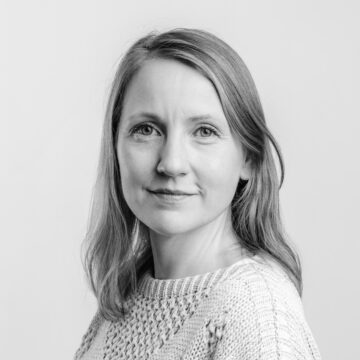

“Many applicants were addressing structural questions within their fields: access to professional opportunities, fair working conditions, representation, artistic independence, knowledge-sharing and the sustainability of cultural organisations. This gave the round a strong professional and social dimension”, says Denisas Kolomyckis, chair of the expert group.
“Another tendency is that inclusion is treated as a method and we can see attention given to geographical peripheries – several networks understood periphery as a productive vantage point rather than a deficit”, he continues.
As usual, many of the network applications were connected to festivals, conferences, showcases and other existing events. Denisas Kolomyckis notes that such events can be valuable meeting points and often provide an efficient way to bring professionals together.
“However, one of the recurring questions in our assessment was whether the application was genuinely developing a professional network or mainly seeking support for an event, production or existing programme. The strongest proposals demonstrated what would happen between the meetings: how partners would work together, what they would learn from one another and what would remain after the funding period. A successful network should not be measured by the number of people attending a gathering, but by the professional relationships and shared work that grow out of it”, Denisas Kolomyckis concludes.
Wide range of networks represented
The applications represented a wide range of fields, including music across several genres, visual arts, dance, theatre, cultural heritage, ceramics, film and media, as well as interdisciplinary work.
“Both established and emerging networks have a place in this programme. An existing network can bring experience, contacts and a realistic understanding of what cooperation requires. At the same time, it is important that short-term network funding does not simply become additional financing for an organisation’s ordinary activities or an established annual event. The application should show what new cooperation the funding makes possible. A first-time network, meanwhile, does not need to demonstrate a long history of collaboration, but it does need to explain why these particular partners should work together and what each of them brings to the relationship”, Denisas Kolomyckis explains.
Despite its name, the Nordic-Baltic Mobility Programme does not require projects to involve cooperation between both Nordic and Baltic countries. Nevertheless, this is an opportunity that many applicants choose to explore.
“The sharpest test for the Nordic-Baltic value is whether the region is the reason for the collaboration or merely its label. The strongest applications showed that the combination of Nordic and Baltic contexts produced learning and added value that none of the partners could reach alone”, says Denisas Kolomyckis.
Examples of funded networks
“The Nordic Drag King Network attracted our attention because it addresses a specific gap in the performing arts field. Drag king artists have not always had the same visibility, professional development opportunities or access to established venues as other performing artists. The proposal understands distinct artistic practice that requires opportunities for research, exchange, technical development and professional recognition. The project is relevant because it supports artists whose practices have often existed outside established professional structures, while also addressing the conditions needed for those practices to develop further.”
“Helsinki International Artist Programme HIAP’s Nordic-Baltic Residencies Network for At-Risk and Displaced Artists responds to the increasingly urgent need for residency organisations and cultural institutions to understand how to support artists who are displaced or at risk. The proposal goes beyond general statements of solidarity. It brings together organisations with practical experience in residency work, advocacy, artist support and professional development. Particularly valuable is the role given to displaced artists themselves through a paid artist steering group. This is an example of how cooperation between institutions can improve the conditions in which artists continue their professional practice, even when their circumstances are unstable.”
“The Nordic-Baltic DIY Spaces Network represents the importance of independent and self-organised cultural infrastructure. Small, alternative and volunteer-led spaces often provide room for experimentation and artistic freedom that is difficult to find within larger institutions. Bringing these spaces together creates an opportunity to exchange practical knowledge and consider how they can support one another without losing their independence. We found this particularly relevant because the resilience of the cultural sector depends not only on its major institutions, but also on the smaller spaces where new artistic practices and communities emerge.”
The next application round for short-term and long-term network funding under the Nordic-Baltic Mobility Programme for Culture opens in January 2027.
Explore all the network projects that received funding here.