
Demos funding enables Nordic encounters where shared challenges can grow into long lasting cooperation. Johanna Granhage from the Swedish mental health organization Mind explains how a network of organizations working with mental health and crisis support has been built on a shared need, trust and a willingness to learn from one another across borders.
A Nordic network does not emerge simply by inviting organisations from different countries to join the same project. A functioning partnership is built gradually, through a shared need, finding the right partners and creating the kind of trust that makes sharing experiences genuinely useful.
Johanna Granhage from the Swedish organisation Mind has been involved in building a Nordic network that brings together organisations working with mental health and crisis support in Sweden, Norway and Finland. The aim of the network is to create a platform where organisations doing similar work can learn from one another, share practical experiences and build personal connections across national borders.
The idea for the network grew out of a very practical situation. Mind was renewing its phone and chat system, and as part of that process the organisation began looking into what kinds of solutions other organisations doing similar work were using. This led to contact with the Norwegian mental health organisation Kirkens SOS. The first conversations quickly showed that the organisations had a great deal in common.
– We realised very quickly that we shared many similar challenges and experiences, Granhage says.
Speaking with another Nordic organisation also felt open in a new way. Nationally, organisations in the same field may cooperate, but at the same time they may compete for the same funding, visibility and audiences. In Nordic cooperation, the setting was different. Without direct competition, it was easier to share experiences.
Shared need brought organisations together
The first contact with the Norwegian partner sparked the idea of a broader Nordic network. If similar organisations in different countries are solving the same kinds of questions, why not share experiences more systematically.
In Finland, MIELI Mental Health Finland became a natural partner. Mind was already familiar with the organisation’s work and knew that it provided similar support services. MIELI’s Swedish-language activities also created common ground.
When Granhage contacted potential partners and asked whether they would be interested in building a network, the response came quickly.
– The answer was a very quick yes. It showed that this is something we all need and want to build, Granhage describes.
The partners were found through both existing connections and practical work. The network did not begin with an abstract idea of Nordic cooperation, but with a concrete observation that similar work is being done in different countries and there could be more shared exchange of knowledge.
The Nordic context creates common ground
According to Granhage, the Nordic countries offer a strong starting point for a network because the organisations’ operating environments have much in common. Shared understanding is not created by language alone, but also by similar ways of discussing, working and understanding social issues.
At the same time, the differences between the countries make the cooperation interesting. It is precisely the combination of similarities and differences that makes the network useful. The partners understand one another’s work but can still offer new perspectives.
A Nordic network can also lower the threshold for talking about unfinished or unresolved issues. According to Granhage, learning does not come only from sharing successes. The real benefit comes when organisations are willing to talk about challenges and uncertainties.
Trust is built between people
Although the network is being built between organisations, Granhage emphasises the importance of personal relationships. A network is not just meetings, documents or a shared Teams channel. It is created when people get to know one another.
The work began in a smaller project group with representatives from all participating organisations. The group has met digitally, planned the network’s first joint meeting and discussed what the cooperation should aim to achieve.
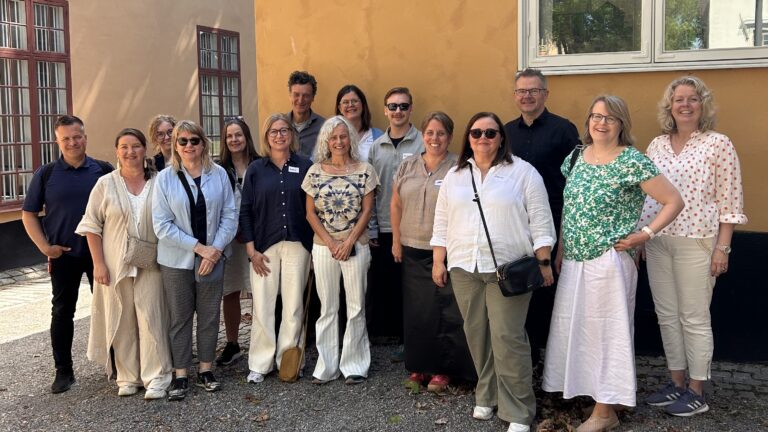
Alongside digital meetings, three physical conferences are planned. One in Stockholm, one in Oslo and one in Helsinki. The aim is that the same core group of around 15 people, five from each organisation, take part in each meeting.
According to Granhage, this is important for building trust. If different people attended each meeting, it would be harder for connections to deepen. When the same people meet again, the threshold for contacting one another between meetings becomes lower.
– We do not want a network where we only hold meetings. We want a network where people can easily help one another and stay in contact outside the meetings as well, Granhage emphasises.
The partnership must feel shared
Mind is the coordinating organisation for the network, but Granhage highlights that the network must not be built from only one organisation’s perspective. The partnership has to feel shared by everyone involved.
The first goal of the network is to share experiences. When organisations from the same field in Finland, Sweden and Norway come together, they bring a great deal of practical knowledge about support services, volunteer work, crisis work and mental health issues with them.
Joint discussion can help organisations develop their own work. Within the network, they can share experiences of technical systems, volunteer training, ethical questions and new ways of working.
Granhage also sees potential for joint advocacy. When organisations become more familiar with one another’s work, they can identify themes where a Nordic voice is stronger than the voice of any single organisation.
Building a network takes time
Based on Granhage’s experience, building a functioning network cannot be rushed. Before the actual cooperation begins, partners need time to discuss their goals, working methods and what kind of structure will serve everyone involved.
Digital tools make everyday communication and document sharing easier. Face-to-face meetings, however, build trust in a way that remote meetings cannot always replace. It is also important to find a core group for the network. When the same people take part in the work, cooperation can become continuous rather than relying on individual meetings.
In the end, a Nordic network is built from simple things. A shared need, the right partners, personal connections and a space where people can speak openly. When these elements come together, the network can become more than a cooperation structure. It can become a place where civil society actors learn from one another and strengthen their voice together.
Find upcoming deadlines for Demos and read more about the funding programme here.