
The Volt funding programme is a language and culture programme that funds projects which seek to raise interest in the art, culture, and languages of other Nordic countries and areas among children and young people up to the age of 25. Every area of art and culture – including film, literature, the performing arts, visual arts, and cultural heritage – is eligible for Volt funding.
The Best Non-required Poetry (NAPP) is an annual Nordic anthology run by young people. The anthology is compiled by a voluntary editorial team consisting of young people aged 15 to 25 in Denmark, Sweden, Norway, and Iceland. Together they set the norms for contemporary Nordic poetry and cultivate and strengthen the joy of reading and a sense of community.
A literary sourdough that fosters new creative thinkers
Founder and editor of Ordskælv, Karen Siercke, describes it as an organic process – constantly changing and in need of nourishment and community-creation.
“When someone asks what Ordskælv is, I usually say that it’s a literary sourdough that bubbles and moves, grows, and needs to be fed. Without young people, Ordskælv’s dough may still have all its flavour and many of its qualities, but it would lack the dreams, desires, doubts, and visions that young people inject to give Ordskælv its ability to move and change. Both for itself and for others.”
Today, Ordskælv (Denmark) runs the largest youth-driven writing and reading community in the Nordics together with its sister organisations Ordskjelv (Norway), Ordskalv (Sweden), Orðaskjálfti (Iceland), and Poesiens Hus (Denmark). They work to promote generations of strong writers, curious readers, and critical thinkers. The sister organisations are based on local forces and have hearts that beat in step with Ordskælv’s clear message: that everyone has the right to express themselves and that beauty is the only protest in difficult times.
Structure meets new editors’ visions and ideas
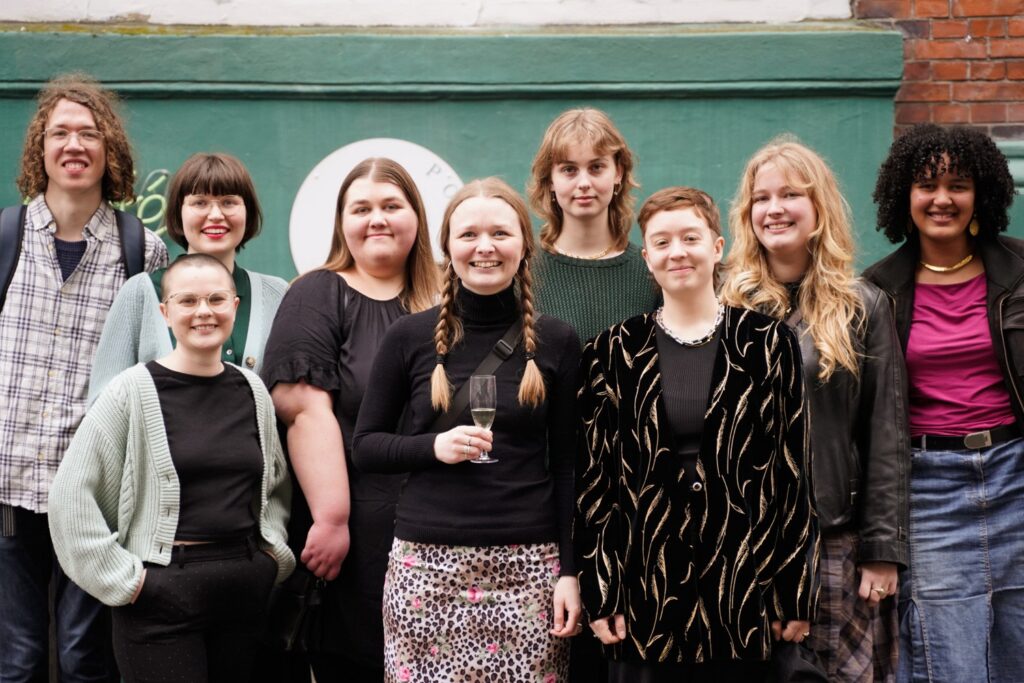
The idea for NAPP was spawned in 2016, when Ordskælv (Denmark) joined forces with Ordskjelv (Norway), Ordskalv (Sweden), and Orðaskjálfti (Iceland) during the creation of the publication “Tomorrow is never a new day”, written by young people from across the Nordic Region who grew up with poverty as a fundamental element in their upbringing. When they were all thrown into a collective void during the COVID pandemic four years later, they invited young people to get together around poetry. NAPP has been published as an annual anthology since 2020.
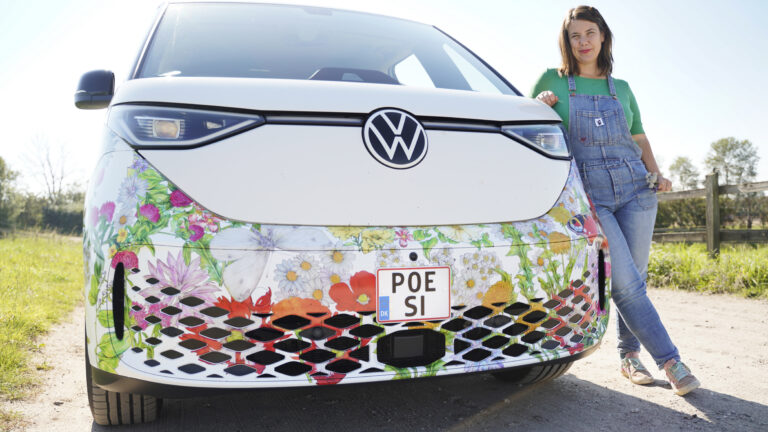
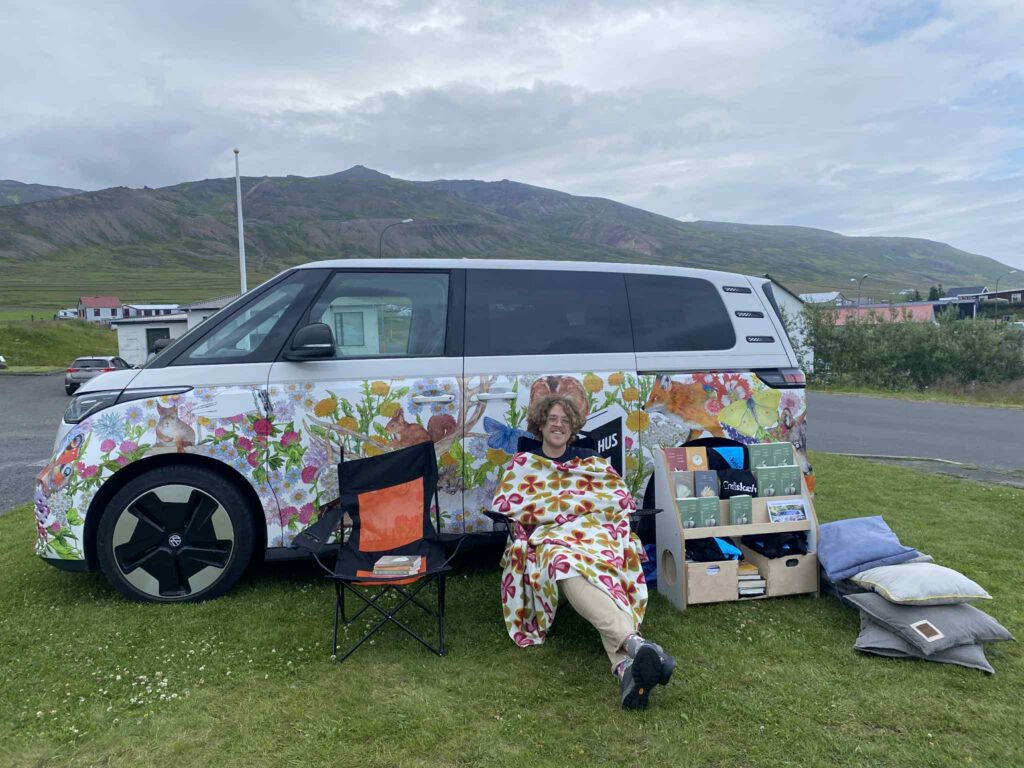
Karen explains that all Ordskælv projects are based on the organisation’s award-winning model and method – a learning-based project model that has the same basic structure, within which it is always new people who meet and create something together within the framework of Ordskælv. All activities take place as part of eight different but overlapping phases which include idea, financing, partnership, workshops, production, launch, and conclusion. The annual anthology always ends with a Nordic tour of The Poetry Bus, which helps to disseminate the process and results of the project, as well as meet new interested parties and introduce them to NAPP.
“The model expands the project participants’ network and gives them the space to express themselves individually, while also being part of a community with others. The model also gives the participants ownership of the creative process and the opportunity to collaborate across age, geographic, ethnic, and social boundaries. In addition, they get an insight into the process from idea to product, a voice in the public arena, and a range of practical communication tools that the participants can take with them,” explains Karen.
Community-building editors play an invaluable role
Deep at Ordskælv’s core lies a longing to pave the way for new communities, both among those who already share a passion for poetry and various forms of expression, as well as among those who are yet to discover this passion. The vision for Ordskælv is to create a curious, loving, active, transformative, sharp, analogous, and radically caring community. Power is also a key element in the project – the power to make the world slower, softer, lighter, and more poetic. Karen refers to a quote from the Danish poet Eske K. Mathiesen:
Pull wool from the barbed wire, roll it into small balls so light that you could float if you have enough in your pocket (published by Forlaget Ekbátana).
Several young people say that NAPP meant a lot to them. According to them, the project has been a unique and meaningful arena for community, curiosity for poetry, and enriching conversation. As Emile, one of the young people in NAPP’s editorial team, explains:
“It’s very important for me to meet my peers each week to discuss poetry. I feel that I’ve missed this sense of community. You don’t find shared reading and conversation about reading everywhere, and so the editors play an invaluable role here. NAPP has really opened my eyes to the fact that all young people – even young people without special qualifications like myself – have something to offer in poetry.”
Tips for applicants: If you listen, you will be rewarded
For those who are interested in applying for funding from Volt for a project related to culture and language for young people, Siercke stresses the importance of listening and creating space for young people to explore their own curiosity and freedom of action:
“If you listen, you will be rewarded. Give your time and generosity. Don’t throw young people under the bus or give them predetermined messages. Show calmness, patience, and everything you have in order to give young people as much power, belonging, and freedom of action as possible.”
Have you been inspired by The Best Non-required Poetry?